Travel Notes
My China Itinerary: Shanghai, Chengdu, and Chongqing
My first-person China itinerary through Shanghai, Chengdu, and Chongqing, including hotel anchors, city roles, logistics, pacing, payment prep, and student-traveler energy planning.
My first-person China itinerary through Shanghai, Chengdu, and Chongqing, with the real hotel anchors, city roles, logistics, and recovery margin that shaped the trip.
Disclosure: This article is based on my own China travel planning and reflections from Shanghai, Chengdu, and Chongqing, plus current official travel-planning sources. It is not visa, financial, medical, or safety advice. Some linked resource pages on Iris The Travel PT may include affiliate or referral links, but this article is written to help you plan realistically first.
My China trip followed a clear route: Shanghai first, Chengdu in the middle, and Chongqing as the finale. I stayed around Holiday Inn Shanghai Nanjing Road, St. Regis Chengdu, and JW Marriott Chongqing, and those hotel anchors shaped how the trip felt just as much as the attractions did. Shanghai gave me the polished arrival. Chengdu gave me the softer reset. Chongqing gave me the dramatic ending.
This is not a fake hour-by-hour diary, but it is the actual route I used and the sequence I still trust after taking the trip. I planned around Shanghai Disney, Hanfu photoshoot moments, Panda Base time, tea culture, hotpot, skyline views, and the very practical reality of moving through China while tired, solo, and still carrying DPT-student responsibilities.
If you want the bigger solo-travel lessons behind the route, start with my China solo travel tips from Shanghai, Chengdu, and Chongqing. If you are still setting up the practical basics, read China apps you need before you go before you build your daily itinerary.
My China Itinerary At A Glance
These are the bones of my actual itinerary: where I based myself, what each city held, and the lesson each stop gave me. The longer planning notes below only make sense because the trip itself had this rhythm first.
Shanghai -> Chengdu -> Chongqing
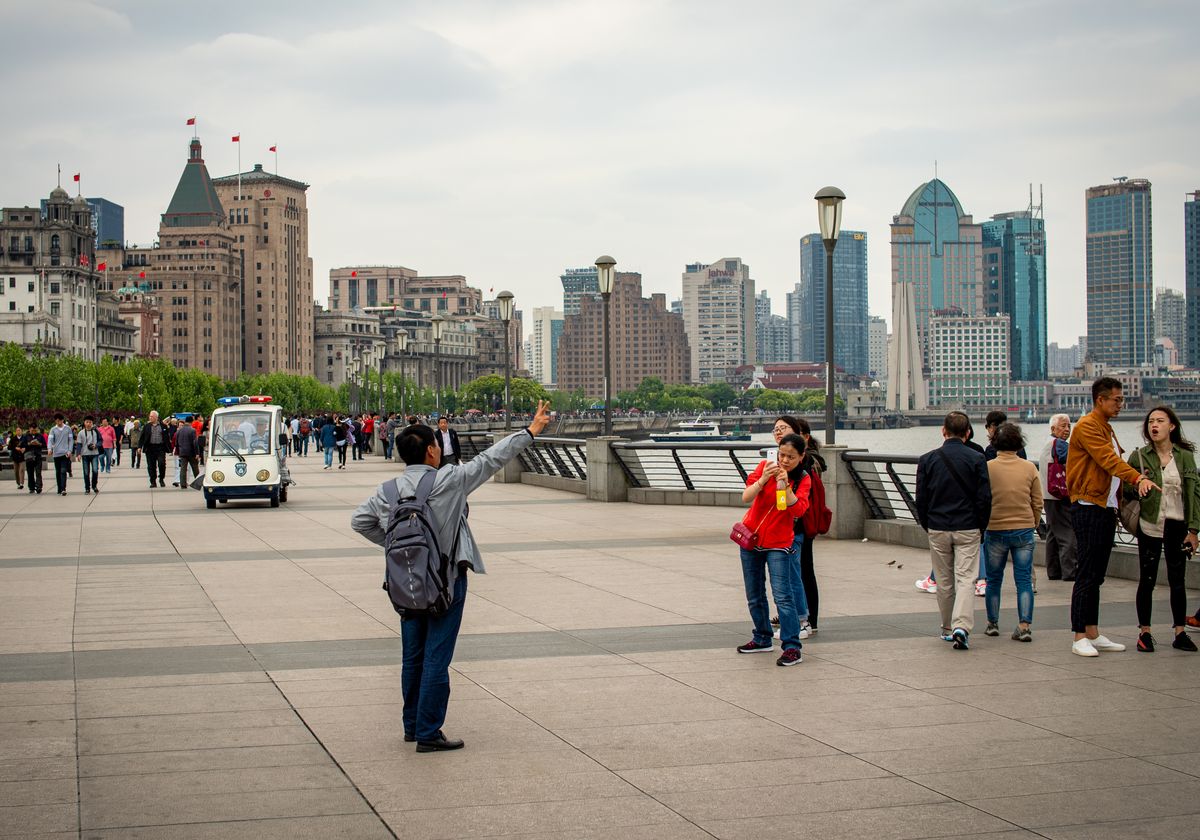
- Shanghai. Stayed: Holiday Inn Shanghai Nanjing Road. My anchors: The Bund, skyline time, Shanghai Disney planning, Hanfu/photoshoot-style moments, and city exploration. What I learned: logistics matter most here because Shanghai is where the trip starts feeling real.
- Chengdu. Stayed: St. Regis Chengdu. My anchors: Panda Base planning, tea culture, food, slower mornings, and a softer pace. What I learned: Chengdu works best as the reset city, not as a rushed checklist stop.
- Chongqing. Stayed: JW Marriott Chongqing. My anchors: hotpot, night views, layered city movement, and dramatic city exploration. What I learned: save energy for this one because Chongqing is more physically demanding than it looks on a saved itinerary.
- Between cities. I treated transfers as real travel blocks, not bonus sightseeing days. The 12306 China Railway site is the first place I check for train planning, but the itinerary still needs room for station arrival, luggage, security, check-in, food, and recovery.
The Route I Took
My China route was Shanghai, Chengdu, and Chongqing, and I like that sequence because the cities do not all feel like versions of the same trip. Shanghai gave me the skyline, modern-city energy, hotel moments, restaurants, photos, and that first big sense of arrival. Chengdu gave me a slower middle, which mattered more than I expected while traveling solo and making decisions all day. Chongqing gave the trip a visually unforgettable ending, but it also asked for more stamina because the city felt vertical, layered, and intense.
That contrast is exactly why I do not recommend rushing through all three just to say you did them. The route works best when each city has a job. Shanghai is the landing and orientation city. Chengdu is the reset and culture city. Chongqing is the high-energy finale. When I think about this through a student-traveler lens, that order makes more sense than stacking the most physically demanding days at the beginning.
What Each City Was Best For
Shanghai: polished, exciting, and logistics-heavy
Shanghai was the city where I felt the glamour of the trip and the planning pressure at the same time. Holiday Inn Shanghai Nanjing Road gave me a practical base for the first stop, which mattered because the beginning of a China trip is where small logistics feel bigger. It was beautiful and exciting, but it also reminded me quickly that a pretty skyline does not cancel out the basics. If your payment app is not ready, your hotel address is not saved, your map setup is confusing, or you are tired from the flight, even a simple first day can feel heavier than it needs to.
I treated Shanghai as the place to buy convenience on purpose. For me, that meant valuing a hotel location that lowered transportation friction, keeping the first day simple, and saving bigger experiences like Disney and photoshoot-style moments for after the basics felt steadier. Shanghai did not feel like a low-effort city break. It felt like a stylish city that rewarded preparation.

Chengdu: softer, slower, and easier to settle into
Chengdu felt like the part of the trip where I could exhale more. St. Regis Chengdu made that middle-stop role feel even clearer: this was the city where comfort, food, tea culture, and a slower pace made sense. That does not mean Chengdu requires no planning. It means I used it differently. If Shanghai is where I front-loaded logistics, Chengdu is where I gave myself a steadier rhythm: one anchor activity, one good meal window, one open block, and enough margin to enjoy the city without constantly checking the clock.
For many travelers, Chengdu also becomes the place where pandas enter the itinerary. Check the Chengdu Research Base of Giant Panda Breeding visitor information directly before building that day, because hours, ticketing, transportation, and visitor flow matter. Do not wedge that kind of morning between two rushed transit days. If the panda base is important to you, give it real space.

Chongqing: dramatic, layered, and more physically demanding
Chongqing is the city I remember as visually unforgettable and less passive than it looks online. JW Marriott Chongqing gave me a polished base for the final stop, but the city itself still felt layered and physically demanding. The official Chongqing overview frames it as a mountain city with a unique setting and major travel appeal, and that matches why I build extra stamina into the plan. This is not the city where I assume every movement will feel flat, quick, or simple.
I liked having Chongqing after I already felt more settled into China travel. By that point, payments, translation, train stations, luggage movement, and solo-restaurant confidence felt less new. That made it easier to enjoy hotpot, night views, photography, and the city rhythm instead of spending the whole time fighting friction.

Why This Order Worked
The sequence is the point: Shanghai first, Chengdu in the middle, and Chongqing last. Shanghai is a strong international gateway and a logical place to get oriented. Chengdu gives the trip a softer middle. Chongqing gives the ending more visual drama.
The biggest reason I like that order is energy management. On a multi-city trip, the first city is not only a destination. It is where you recover from the flight, test your apps, learn how payments feel in real life, get used to translation support, and figure out your travel rhythm. Shanghai made more sense for that soft landing than asking myself to handle the most physically demanding city immediately.
I also avoid making every transfer day a sightseeing day. A train or flight day still counts as a travel day, even when the ride itself is efficient. The official 12306 China Railway site is the place I start for train planning, but I still leave practical room around station arrival, luggage, security, platform finding, and recovery after check-in.
The Logistics I Settled Before Landing
China is one of the places where I prefer to over-prepare the basics rather than troubleshoot in public while tired. Before landing, make sure payment apps are downloaded and connected, hotel names and addresses are saved in English and Chinese where possible, and transportation options are not living only in memory.
The payment piece matters. China has improved payment access for overseas visitors, and State Council payment guidance notes options including mobile payment, bank cards, cash, bank accounts, and e-CNY. It also notes that foreign users can link international cards in Alipay and WeChat Pay. That does not mean landing casually and hoping everything works is a good plan. My practical version is simple: set it up before the flight, test gently early in the trip, and keep a backup plan.
My minimum China setup includes payment, translation, maps, ride or transportation support, hotel address screenshots, offline copies of key confirmations, and a small arrival-day plan. I now prefer fewer itinerary items and a smoother first 24 hours over arriving with a perfect attraction list and no working way to pay for water.
How I Planned This as a DPT Student
Traveling during school has taught me that the question is not only “Can I fit this trip into the calendar?” It is “Can I support myself well enough that the trip does not create a mess when I come home?” That is the filter I used for China: deadlines first, then transfer days, then recovery windows, then the city order.
If I had online class, studying, or a major assignment near the trip, I did not pretend every evening was free. I chose hotel setups that made laptop time realistic, kept quieter room in the middle, and avoided booking every beautiful idea just because it looked good while planning. A trip can be full without being packed.
This is also where budgeting becomes more personal. I do not think the cheapest option is always the wisest option for a student traveler. Sometimes the smarter save is skipping an activity you only half care about. Sometimes the smarter splurge is location, a cleaner transfer, or a calmer first night. I wrote more about that in my student travel budget strategy.
A Realistic City-by-City Planning Framework
I build this route in blocks rather than obsessing over exact minute-by-minute timing:
- Shanghai: Holiday Inn Shanghai Nanjing Road, soft landing, skyline time, Disney/photoshoot-style planning, one flexible recovery block, and app/payment testing before the trip gets more complicated.
- Chengdu: St. Regis Chengdu, slower mornings, food, tea culture, panda-base planning, and less pressure to make every hour productive.
- Chongqing: JW Marriott Chongqing, hotpot, night views, layered city movement, more walking stamina, earlier starts when needed, and a plan that respects how much energy the city can take.
For a shorter trip, do not force all three cities. Choose Shanghai plus one inland city. Choose Chengdu if you want a softer pace and food-forward reset. Choose Chongqing if you want more visual intensity and do not mind a trip that feels more physically active. For a longer trip, keep all three but protect the transfer days instead of treating them like bonus sightseeing days.
What I Would Change Next Time
Next time, I still would not make the first day too ambitious. Even if a flight lands early, your nervous system may not be ready for a packed schedule. I would not treat payment setup as a quick airport task. I would not assume every station, hotel, restaurant, or ride situation will feel intuitive when I am tired. I would not move cities just because the map says the ride time is manageable.
I am also careful with comparison. Shanghai, Chengdu, and Chongqing are not trying to give the same kind of trip. If I judge Chengdu by Shanghai’s skyline energy, I miss what makes Chengdu helpful. If I judge Chongqing by whether it feels easy, I miss why its intensity is part of the memory. The better question is, “What role does this city play in the whole route?”
FAQ
Is Shanghai, Chengdu, and Chongqing too much for a first China trip?
It can be too much if you rush it. Keep all three only if you have enough days to protect transfer time and recovery. If time is tight, choose Shanghai plus Chengdu or Shanghai plus Chongqing instead of forcing the full route.
Which city felt easiest to settle into?
For me, Chengdu felt softer and easier to settle into than the other stops. That is why I like it in the middle of the route. It gives the trip breathing room after Shanghai and before Chongqing.
Which city needs the most energy?
Chongqing is the one I give the most physical margin. I remember it as dramatic, layered, and more demanding than expected. Plan lighter evenings and avoid stacking it after a rough travel day.
What should I set up before going to China?
At minimum, handle payment apps, translation, maps, hotel addresses, transportation planning, and offline copies of confirmations before departure. My China apps guide walks through that setup in more detail.
Final Thoughts
The best version of my China itinerary was not the one with the most stops squeezed into the smallest number of days. It was the one where each city had a purpose. Shanghai helped me arrive and get oriented. Chengdu gave me room to soften the pace. Chongqing gave the trip a memorable, high-energy finish. If you plan the route around that rhythm, the trip can feel full without feeling chaotic.
Travel Notes
Read Next in the China Cluster
- China Apps You Need Before You Go for payment, translation, hotel-address, and arrival-day setup.
- China Solo Travel Tips for the bigger lessons from Shanghai, Chengdu, and Chongqing.
- Shanghai Solo Travel Guide for the city-specific soft landing and convenience strategy.
- My Shanghai Disney Experience if Disney is part of your Shanghai block.
- China Travel Guide for the whole China planning cluster.
After the China-specific planning is handled, the broader student-travel pieces I would keep nearby are how I traveled while in DPT school and my student travel budget strategy.
Keep exploring
Helpful Iris resources for this topic
Scholarship Resources
Search PTA, PTA-to-DPT, DPT, healthcare, first-generation, minority, women, and graduate scholarship opportunities.
Open resource DPTDPT Student Resources
Find scholarships, PTA-to-DPT support, study resources, clinical prep, productivity tools, and wellness routines for DPT school.
Open resource ChinaChina Travel Guide
Plan around Shanghai, Chengdu, Chongqing, pandas, food, photoshoots, hotels, apps, and solo travel logistics.
Open resourceFree Scholarship Tool
Get the PTA to DPT Scholarship Tracker
Track deadlines, award amounts, essays, recommendations, submission dates, notes, and renewals without letting scholarship season become scattered.Get the free trackerShare This Article
Found this helpful?
Share it with another student, clinician, traveler, or future DPT who might need it.