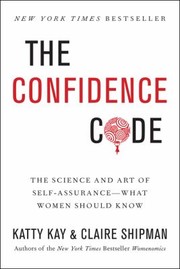
 Published work-level display cover; Iris’s owned edition is not identified. Iris wrote a reflection about this book.
FinishedThe Confidence Code
A Reading Room reflection
The Confidence Code
Reflection by Iris
- Confidence
- Self-Compassion
- Identity
- Emotional Intelligence
- Adaptability
- Growth
- Self-Talk
I Wasn’t Sure Where This Was Going
I picked up The Confidence Code because I kept seeing it recommended online as a book women should read. The beginning felt research- and interview-heavy. I understood the premise, but I wasn’t sure yet what I would personally take from it. The ending is where it began to resonate more strongly.
Then It Started Feeling Familiar
The discussion of negative automatic thoughts connected with ideas I had already encountered through therapy and cognitive behavioral therapy-informed reflection. It did not feel entirely new, but it made the pattern harder to ignore.
The Part I Actually Want to Practice
My takeaway is not simply that I understand negative thoughts. I want to become more intentional about noticing and challenging the ways I talk to myself.
The Answer I Wish I’d Given
Earlier that day, I had a caregiving interview. The interviewer asked, “What would you say is your greatest strength?” I had difficulty answering. After finishing the book, I realized I could have said that I’m emotionally intelligent, adaptable in different social environments, and able to connect with people easily. Sometimes the qualities that come most naturally to us are the ones we are least likely to recognize as strengths.
The Confidence to Be Average
I keep returning to the idea that it is okay to be average at some things. Not every hobby, interaction, experience, class, or activity has to prove exceptional ability.
Being average at something doesn’t make the experience meaningless.Iris’s reflection
Self-Compassion
I can often extend compassion to other people more easily than I extend it to myself. That leaves me with a question I do not want to rush past: when does self-improvement become self-rejection?
Future Self
Part of confidence, for me, is connected to the woman I thought I might naturally become by this age. I’m beginning to understand that she does not simply appear. I get to participate in becoming her.
Before I read it
I associated confidence more strongly with certainty.
After I read it
I’m beginning to think confidence can also involve how I respond while uncertainty is still present.
These reflections describe my personal experience with ideas I’ve encountered through reading and therapy. They are not psychotherapy or mental-health treatment.