A personal library
The Reading Room
This isn’t a record of how much I read. It’s a record of what stayed with me.
Books can arrive here as finished reflections, a quiet note that I read them, or a place on the shelf for later.
Live → notice → reflect → keep what matters.
Enter the libraryFrom Iris’s shelf
A living library.
Read slowly. Keep what matters. Leave room for the next book.
Read
Books I’ve spent time with.
A Reading Room reflection
The Confidence Code
- Confidence
- Self-Compassion
- Identity
- Emotional Intelligence
- Adaptability
- Growth
- Self-Talk
I Wasn’t Sure Where This Was Going
I picked up The Confidence Code because I kept seeing it recommended online as a book women should read. The beginning felt research- and interview-heavy. I understood the premise, but I wasn’t sure yet what I would personally take from it. The ending is where it began to resonate more strongly.
Then It Started Feeling Familiar
The discussion of negative automatic thoughts connected with ideas I had already encountered through therapy and cognitive behavioral therapy-informed reflection. It did not feel entirely new, but it made the pattern harder to ignore.
The Part I Actually Want to Practice
My takeaway is not simply that I understand negative thoughts. I want to become more intentional about noticing and challenging the ways I talk to myself.
The Answer I Wish I’d Given
Earlier that day, I had a caregiving interview. The interviewer asked, “What would you say is your greatest strength?” I had difficulty answering. After finishing the book, I realized I could have said that I’m emotionally intelligent, adaptable in different social environments, and able to connect with people easily. Sometimes the qualities that come most naturally to us are the ones we are least likely to recognize as strengths.
The Confidence to Be Average
I keep returning to the idea that it is okay to be average at some things. Not every hobby, interaction, experience, class, or activity has to prove exceptional ability.
Being average at something doesn’t make the experience meaningless.Iris’s reflection
Self-Compassion
I can often extend compassion to other people more easily than I extend it to myself. That leaves me with a question I do not want to rush past: when does self-improvement become self-rejection?
Future Self
Part of confidence, for me, is connected to the woman I thought I might naturally become by this age. I’m beginning to understand that she does not simply appear. I get to participate in becoming her.
Before I read it
I associated confidence more strongly with certainty.
After I read it
I’m beginning to think confidence can also involve how I respond while uncertainty is still present.
These reflections describe my personal experience with ideas I’ve encountered through reading and therapy. They are not psychotherapy or mental-health treatment.
Books / What stayed with me
The Courage to Be Disliked
A book I liked arguing with—and one that made me reconsider what the past, other people, and fear are allowed to decide about a life.
- Psychology
- Agency
- Identity
- Relationships
- Boundaries
- Meaning
Opening reflection
Before the passages
I was hooked by this book almost immediately, partly because I kept disagreeing with it.
It takes ideas that usually feel settled—trauma, insecurity, relationships, approval, happiness—and pushes them to an extreme. Sometimes I thought the philosopher was making a surprisingly good point. Sometimes I wanted to argue with him. Either way, I kept stopping.
That is why I started photographing pages.
The beginning especially pulled me in because the book was willing to challenge explanations I had rarely questioned. Toward the end, I became less engaged. The central argument started to feel repetitive, and by then I felt like I understood what the authors were trying to say.
But I kept thinking about certain ideas long after I turned the page.
I do not agree with Adlerian psychology completely. Some of its claims feel far too absolute when taken literally. What I liked was being forced to separate two questions I had often treated as the same:
What has happened to me?
and
What does what happened get to decide about the rest of my life?
That distinction stayed with me.
Part 1
Explanation Is Not Destiny
The book’s opening argument is deliberately provocative. It treats the past less as a cause that controls the present and more as an experience whose meaning can still change. I disagree with the absolute version of that claim. Trauma is real, and its effects are not erased by deciding to think differently. But I kept returning to the smaller, more useful question underneath the provocation: can an explanation be true without becoming a permanent sentence?
The author’s words
Yes, I am. Adamantly.
My response
This was probably the first point where the book made me stop completely.
I do not agree with denying trauma. Experiences can change people, affect how safe they feel, shape relationships, and leave consequences that are very real. That is where I think the book becomes too absolute.
But once I got past how provocative the wording was, I became interested in the question underneath it.
There is a difference between acknowledging that the past influenced me and deciding that the past has already written the rest of my story.
That distinction feels much more useful to me.
Something can explain why I became afraid, insecure, guarded, angry, or hesitant without automatically proving that I have to stay that way forever.
What happened matters.
But explanation is not destiny.
Agency and the pastThe author’s words
a psychology of courage
My response
What interested me here was how often staying the same can feel safer even when we do not particularly like where we are.
Change introduces uncertainty.
Sometimes familiar unhappiness is easier to tolerate than an unfamiliar version of ourselves.
That does not mean every difficult situation is secretly something a person chooses. I think that interpretation would be unfair.
But I do think there are times when fear of what comes next keeps us attached to patterns we already know are not helping us.
Change requires more than wanting something different.
Sometimes it requires being willing to become unfamiliar to yourself.
ChangePart 2
Comparison Can Create the Thing It Measures
One of the ideas I kept returning to was how much inferiority depends on comparison.
A trait does not automatically arrive with a meaning attached to it.
Being less experienced, having less money, being shorter, slower, quieter, less confident, or behind someone else does not automatically make a person inferior. A lot of that judgment appears only after another person becomes the measuring stick.
That does not mean every insecurity is imaginary.
What interested me was how easily comparison can turn a difference into a verdict.
Someone else’s strength can become evidence of my weakness only if I decide their life is the standard mine is supposed to match.
The same section also made me think differently about superiority. Constantly needing other people to know what I have achieved can look like confidence from the outside, but it can still make my sense of worth dependent on an audience.
The author’s words
So weakness is powerful?
My response
This section made me uncomfortable, which is probably why I kept thinking about it.
Pain can become part of someone’s identity without the pain being fake.
Those are not the same thing.
If something has shaped how I understand myself for years, letting go of that explanation can feel like losing part of the story I use to make sense of who I am.
I think the book becomes too harsh when it treats suffering too simply.
But I did keep the question underneath it:
What happens when an explanation that once helped me understand myself eventually becomes something I feel unable to live beyond?
That question felt worth keeping.
Identity and sufferingPart 3
Care Without Control
The separation of tasks became one of the most useful ideas in the entire book for me.
I can care about someone.
I can help.
I can explain what I think.
I can give advice.
I can worry.
I can make myself available.
But at some point, another person’s decision belongs to them.
That sounds obvious when written down, but emotionally it is much harder.
Caring about someone can make control feel like responsibility. If I know what I think would help, it is easy to believe that loving someone means making sure they choose it.
But those are different things.
There is a boundary between supporting someone and trying to become the author of their decisions.
The same thing works in reverse.
Other people are allowed to have opinions about my life.
That does not automatically mean their opinion becomes my assignment.
The author’s words
When receiving praise becomes one’s goal
My response
I do not think wanting recognition is inherently bad.
It feels good when someone notices your work.
It feels good to be praised.
It feels good to make someone proud.
What bothered me—in a useful way—was the idea of what happens when recognition stops being something I enjoy and becomes something I require before I trust my own decisions.
At that point I am no longer simply receiving another person’s opinion.
I am outsourcing part of my life to it.
I do not need to become indifferent to what people think.
That is not realistic, and I do not think it would make me a better person.
The goal I took from this was smaller:
I can appreciate approval without building my life around collecting it.
RecognitionPart 4
The Courage to Be Disliked
The title can sound like permission to stop caring about people. That is not what I kept from it. The version that stayed with me was quieter: living by my own values means accepting that agreement is not guaranteed.
The author’s words
The courage to be happy also includes the courage to be disliked.
My response
This may be the line that best captures what I ultimately kept from the book.
I do not read “the courage to be disliked” as permission to be inconsiderate, selfish, or intentionally difficult.
I read it as accepting a consequence of having a life that is actually mine.
If every decision has to preserve everyone’s approval, then eventually other people’s reactions become the boundaries of my life.
Living according to my own values means that sometimes someone will disagree with me.
Sometimes someone will misunderstand me.
Sometimes someone may genuinely dislike what I choose.
That does not automatically mean I am right.
But being disliked does not automatically mean I am wrong either.
Freedom and approvalPart 5
Giving Your Own Life Meaning
By the end, I was less interested in accepting every Adlerian claim and more interested in the pattern connecting them. Again and again, the book returns responsibility to the individual—not responsibility for everything that happens, but responsibility for what we decide to do with what is available to us.
The author’s words
People are my comrades, and the world is a wonderful place.
My response
By the end of the book, I was less interested in accepting every Adlerian claim and more interested in the larger pattern connecting them.
Again and again, the book pushes responsibility back toward the individual.
Not responsibility for everything that happens.
Not control over every circumstance.
But responsibility for what we decide to do with what is available to us.
I like the idea that meaning is not always something we discover waiting for us fully formed.
Sometimes meaning is something we participate in making.
The circumstances of a life matter. Luck matters. Other people matter. Loss matters. Opportunity matters.
Agency does not mean pretending those forces do not exist.
It means recognizing that even inside limits, there are still decisions that belong to us.
Meaning and agencyReading critically
Where I Pushed Back
I found the book’s language around trauma and chosen unhappiness too absolute. Circumstances, illness, abuse, poverty, discrimination, grief, and psychological conditions cannot be reduced to a lack of courage. Beneath the extremity of the wording, however, I found a question worth considering: even when I did not choose what happened, what agency do I still have in deciding what happens next?
I also question the idea that worth comes from being useful. Contribution can bring meaning and connection, but a person should not have to remain productive, helpful, or needed at all times to deserve worth.
After the last page
What I Kept
Explanation is not destiny.
Acceptance is not resignation.
Compassion is not control.
Boundaries are not cruelty.
Disagreement is not rejection.
Being disliked does not mean being wrong.
Being praised does not mean being right.
Helping someone does not mean controlling their decision.
Freedom does not require indifference toward other people.
Agency does not mean having control over everything.
Closing reflection
I can care what you think without giving you authorship over my life.
That is probably the simplest way I can describe what I kept from this book.
I did not finish The Courage to Be Disliked convinced that Adlerian psychology explains everything.
Some ideas I agreed with immediately.
Some made me uncomfortable.
Some still feel too absolute when taken literally.
And toward the end, I became bored because I felt like I already understood the argument the book kept returning to.
But I also photographed page after page.
That matters more to me than whether I agreed with every sentence.
A good book does not always have to convince me.
Sometimes it is enough for it to make an assumption I have carried for years suddenly feel like a question.
This is a personal reflection on ideas encountered while reading. It is not psychotherapy or mental-health treatment.
Books / What stayed with me
The Happiness Hypothesis: Finding Modern Truth in Ancient Wisdom
A book I mostly found boring—and a few ideas I was still glad I met.
- Psychology
- Happiness
- Money
- Philosophy
- Culture
- Wisdom
Opening reflection
Before the passages
I expected to like The Happiness Hypothesis more than I actually did.
On paper, it sounds like exactly the kind of book I should enjoy: psychology, philosophy, happiness, ancient ideas, modern research.
But a lot of it lost me.
I found myself reading without feeling especially pulled forward, and eventually I had to admit that I was bored.
Still, I kept taking pictures of certain pages.
That is what made the book interesting to me in retrospect.
It did not become a favorite.
I am not interested in pretending that it did.
But buried inside a book that often struggled to hold my attention were a few ideas that made me stop long enough to think about how I spend money, what I expect to make me happy, and how quickly we assume that one worldview has everything figured out.
Those are the pages I kept.
Part 1
Wanting Things vs. Being Happier
A surprising amount of the material I kept came back to the gap between what people pursue and what actually improves the experience of being alive. We can be extremely good at pursuing something without being very good at predicting how much happier having it will make us.
The author’s words
invisible hand
My response
This was one of the first sections that made the book feel interesting to me again.
Economics is very good at describing what people choose.
But choosing something and becoming happier because of it are not necessarily the same thing.
That sounds almost embarrassingly obvious, yet a huge amount of everyday life is built around acting as if wanting something is evidence that obtaining it will improve us.
More money.
A nicer apartment.
Another purchase.
A different job.
Another achievement.
Something else to prove that life is moving in the right direction.
I do not think wanting those things is wrong.
What interested me was the possibility that our ability to pursue rewards may be much stronger than our ability to predict which rewards will actually matter once we have them.
Pursuit and happinessPart 2
What We Spend Money On
“Does money buy happiness?” is almost too broad to be useful. The more interesting question is what we are using the money for. The pages I saved made a distinction between spending that signals status and spending that changes the experience of daily life—through time, convenience, experiences, or relief from a recurring frustration.
The author’s words
Americans, at least, gain no prestige from having the shortest commute.
My response
I liked this section because it made the money question more specific.
“Does money buy happiness?” is almost too broad to be useful.
A better question is:
What are we using the money for?
The part that stayed with me was the difference between spending designed to signal something and spending that actually changes the experience of daily life.
There are purchases whose value comes partly from comparison: having the nicer version, owning what other people can see, being able to demonstrate status.
Then there are things like experiences, time, convenience, or reducing a recurring frustration.
Those may not look as impressive from the outside, but they can change what life actually feels like.
I do not take this as “never buy things.”
I take it as a better question to ask before I spend:
Am I buying something because I genuinely value the experience it will give me, or because I like what having it seems to say about me?
Money and experiencePart 3
More Than One Way to Be Right
This was probably the part of the book I found most interesting intellectually. I am used to ideas being presented as if one side eventually has to defeat the other. Cultural psychology makes that much harder.
The author’s words
The Eastern and Western approaches to life are also said to be opposed.
My response
This was probably the part of the book I found most interesting intellectually.
I am used to ideas being presented as if one side eventually has to defeat the other.
Individualism or community.
Change or acceptance.
Tradition or progress.
Liberal or conservative.
Eastern or Western.
But cultural psychology makes that much harder.
Different cultures can notice different parts of human life because they begin with different assumptions about what matters.
That does not mean every idea is equally correct.
It means that disagreement can contain information.
Sometimes another worldview is useful precisely because it notices something my own worldview makes easy to overlook.
That is a much more interesting definition of wisdom to me than simply becoming more certain that my side has already figured everything out.
Culture and perspectivePart 4
On Balance
The conclusion finally arrived at the kind of wisdom I wanted from the book: not pretending that every perspective is equally correct, but being humble enough to ask what another way of seeing can notice that mine does not.
The author’s words
ancient and new, Eastern and Western, even liberal and conservative
My response
This felt like the book finally arriving at the idea I wanted it to reach.
Balance does not have to mean taking every opposing idea and meeting exactly in the middle.
Sometimes one side is more convincing.
Sometimes one idea has better evidence.
But wisdom can still require enough humility to ask what another perspective sees that mine does not.
I liked that Haidt ends by pulling together ancient and modern thought, Eastern and Western traditions, and even liberal and conservative moral perspectives.
Not because all of them are interchangeable.
Because a human life is complicated enough that one framework probably will not answer every question equally well.
Balance and wisdomPart 5
What Was Still Worth Keeping
Once I stopped asking the book to become a favorite, the pages I had saved were enough. One made me think about what we chase. Another made me think about what money is actually useful for. The last pages made me wonder whether wisdom sometimes begins by holding competing perspectives open long enough to understand what each one sees.
Reading critically
Where I Pushed Back
My strongest reaction to this book was not disagreement with one single argument. It was that much of the book did not hold my attention. I do not want to turn that into a more flattering review than it was. The ideas below mattered because they were the moments that cut through—not because the book worked for me from beginning to end.
After the last page
What I Kept
Wanting something is not proof that having it will make me happier.
What I spend money on matters as much as how much I have.
Status and experience are not the same form of value.
Disagreement can contain information.
Wisdom does not require pretending every perspective is equally correct.
A book does not have to be a favorite to leave behind something useful.
Closing reflection
I did not love The Happiness Hypothesis.
Honestly, a lot of it bored me.
But I think that may be why the pages I photographed matter more.
They were the moments when something cut through.
The sections I kept were not all making the same argument. One made me think about what we chase. Another made me think about what money is actually useful for. Another pushed me toward the possibility that wisdom can come from holding competing perspectives long enough to understand what each one sees.
I probably will not remember most of this book.
But maybe that is not the standard a book has to meet.
Sometimes three pages are enough.
A book does not have to hold me from beginning to end to leave me with something worth keeping.
A series-level reflection
Harry Potter
Series / CollectionOne story I met as an adult
What stayed with me
I honestly just thought the series was a really good read.
Reading it as an adult brought back this strange sense of childhood nostalgia, even though I didn’t actually grow up reading the books. I can understand why so many people loved the story when they were younger — and why people still love it now.
More than anything, it made me wish I had been someone who read more books as a kid. I think I would have really loved Harry Potter then.
Maybe part of what stayed with me was realizing that sometimes you can meet a story later than everyone else and still understand why it mattered so much.
Inside this collection
Seven books, held together.
- Harry Potter and the Sorcerer’s Stone
- Harry Potter and the Chamber of Secrets
- Harry Potter and the Prisoner of Azkaban
- Harry Potter and the Goblet of Fire
- Harry Potter and the Order of the Phoenix
- Harry Potter and the Half-Blood Prince
- Harry Potter and the Deathly Hallows
Read next
Books waiting patiently.
No deadline. No yearly target. Just a shelf for later.
When you want something thoughtful and emotional.
When you want something thoughtful and human.
When you want to think about meaning.
When you want to escape into a page-turner.
When you want a large world to disappear into.
When you want something immersive and strange.
When you want myth, transformation, and escape.
When you want a relationship-centered story.
When you want something emotional and propulsive.

When you want something romantic and emotional.
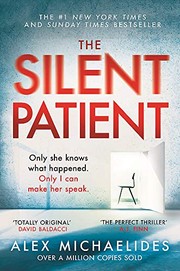
When you want a darker page-turner.
When you want fantasy, romance, and momentum.
No books match that search yet. Try a title, author, theme, or a phrase from a public note.
Across the shelf
Books in conversation.
Simple paths between records that already share a verified connection.
- Being Mortalin conversation withWhen Breath Becomes Air
Pick my next book
What kind of reading mood is this?
A playful nudge from the books already waiting — not another goal to keep up with.