DPT Study Guides
Congenital Muscular Torticollis NPTE-Style Practice Questions
Guideline-informed practice questions for DPT learners to recognize CMT patterns, screen context, and recall the five first-choice intervention components.
Study with Iris – pediatric clinical reasoning

CMT questions: sort the pattern, screen the context, build the plan.
This resource uses the 2024 APTA Academy of Pediatric Physical Therapy CMT guideline as a study anchor. It helps learners rehearse pattern recognition and guideline-informed reasoning; it does not replace infant assessment, referral procedures, or clinical supervision.
Describe the pattern before naming it.
The classic learning description
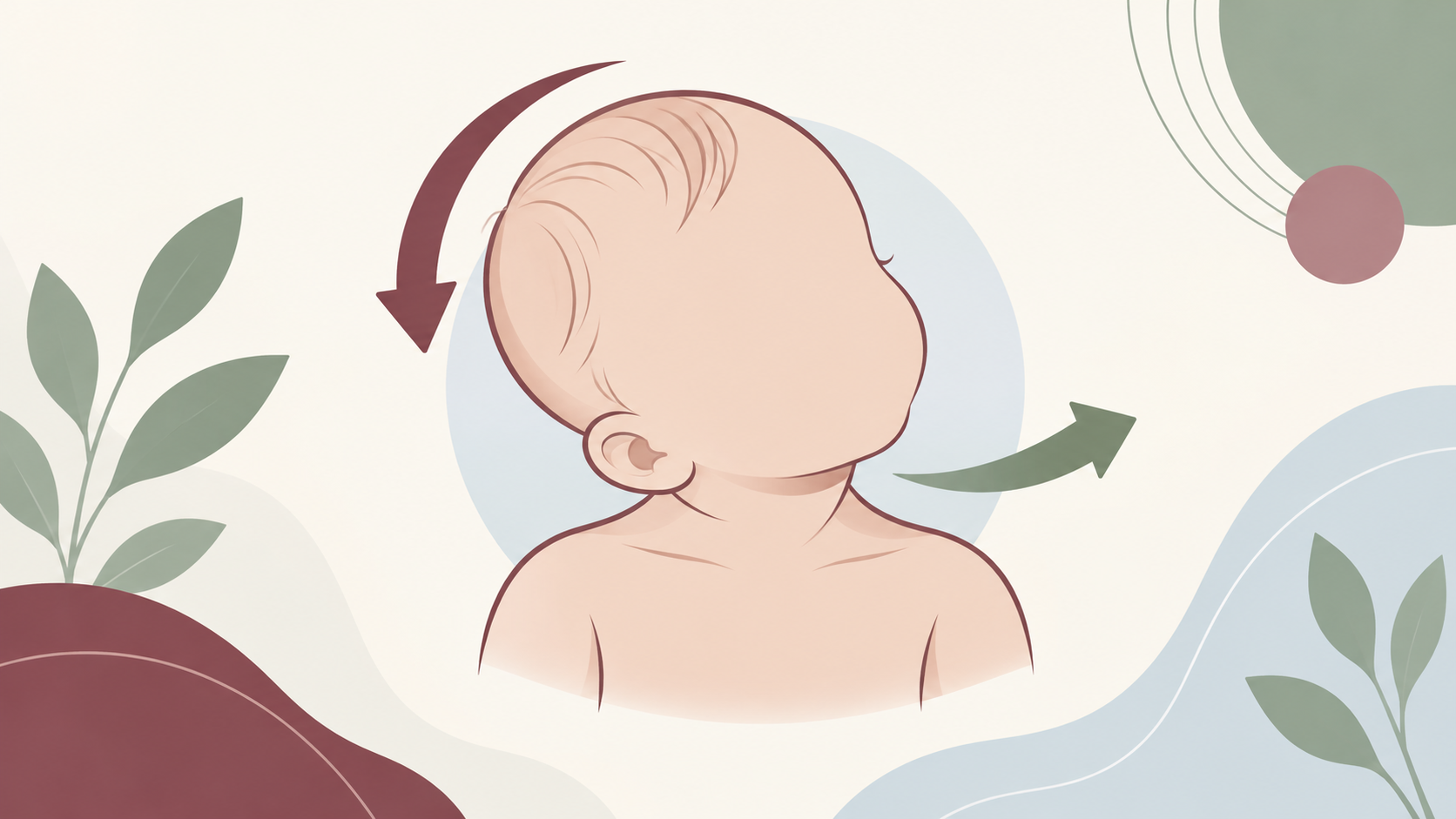
CMT is commonly organized as cervical lateral flexion toward one side with rotation to the opposite side, often related to unilateral SCM shortening or imbalance.
That description is a starting point, not a diagnosis. A learner should still ask whether the history, examination, and screen are consistent with a muscular postural pattern.
Memory cue: “Tilt toward, turn away” – then screen before you treat.
Recall the full five-part intervention set.
The guideline describes these as first-choice intervention components. The exam-ready lesson is that CMT management is more than one stretch or one exercise.
Answer first. Open the rationale second.
1. Which head-and-neck description is most typical of the CMT pattern?
2. Which choice best represents first-choice intervention?
3. What is the safest reasoning step when an infant has atypical or non-muscular findings?
4. What should caregiver education help create?
5. Why is an early, complete evaluation important for a study question?
Sources and review note
- Sargent B, Coulter C, Cannoy J, Kaplan SL. Physical Therapy Management of Congenital Muscular Torticollis: A 2024 Evidence-Based Clinical Practice Guideline From the APTA Academy of Pediatric Physical Therapy. Pediatric Physical Therapy. 2024;36(4):370-421. doi:10.1097/PEP.0000000000001114.
- APTA Pediatrics: CMT clinical practice guideline and implementation resources.
Evidence review: October 14, 2026. No patient images or copied course graphics are used in this guide.
Continue learning
DPT Study Guides
Keep exploring
Keep exploring
Helpful Iris resources for this topic
Share This Article
Found this helpful?
Share it with another student, clinician, traveler, or future DPT who might need it.