DPT Student Life
How I Plan My DPT School Week Without Falling Behind
My realistic DPT school weekly planning system for classes, studying, labs, wellness, and life when you want structure without burning out.
DPT school can make a week feel full before it even starts.
You can have class, lab prep, check-offs, discussion posts, meals to figure out, laundry you keep pretending is not urgent, and a body that still needs sleep even if your planner does not care. If you are also coming into this season from PTA life, balancing work, or trying to keep some version of yourself intact outside of school, the week can start to feel like something you survive instead of something you actually lead.
I have had weeks like that. The kind where I kept telling myself I just needed to be more disciplined, when what I really needed was a system that matched real life.
That is what this post is about.
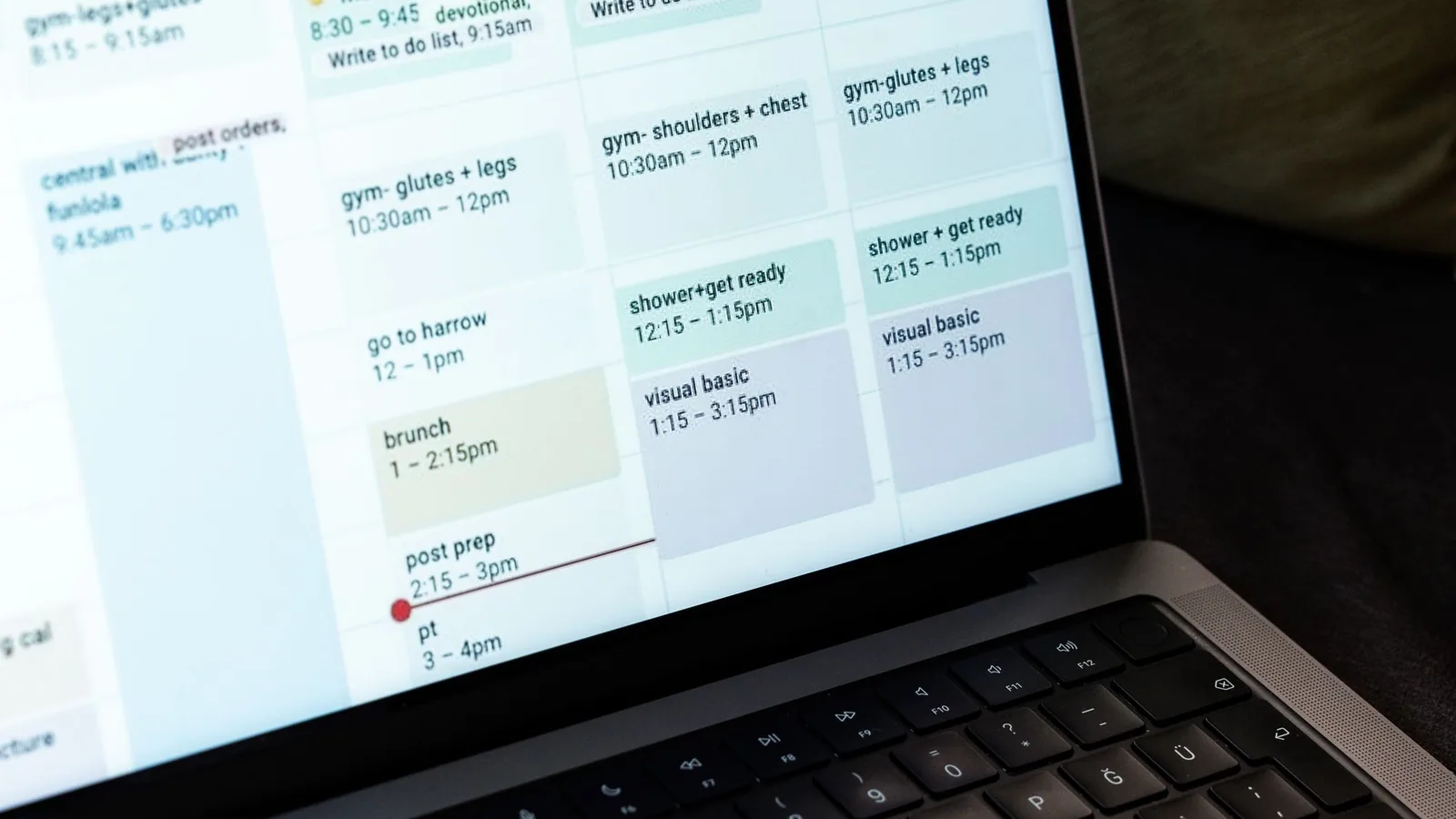
This is the weekly planning rhythm that helps me hold class, studying, practical prep, meals, errands, and recovery in one place without turning my whole life into one giant color-coded guilt project. It is not fancy. It is not perfect. But it is the kind of plan that lets me keep moving without feeling scattered every single day.
If you are building your own routine for DPT school, especially in a PTA-to-DPT season, I hope this gives you a calmer place to start.
Why DPT Weeks Feel Chaotic So Quickly
One reason DPT school feels overwhelming is that the work usually arrives in different forms at the same time.
It is not just one exam to study for. It is classes, lab prep, reading, practical skills, group work, forms, emails, commute time, meals, and the mental load of constantly remembering what is coming next.
That kind of week can trick you into thinking the problem is laziness or poor time management. A lot of the time, the real problem is that everything is living in your head at once.
When I notice that feeling, I try not to jump straight to “work harder.” I try to get the week out of my nervous system and onto paper first.
That shift matters. A visible week is easier to manage than a week you are carrying around mentally.
If you are in a longer transition season too, this can feel even heavier. That is part of why I still come back to From PTA to DPT: My Journey and PTA to DPT: How to Keep Moving Forward Without Burning Out. Sometimes the schedule stress is not only about tasks. Sometimes it is also about the weight of what this whole season means.
The Weekly Reset That Keeps Me From Starting Behind
I do best when I reset the week before Monday gets loud.
For me, that usually means one short planning block on Friday or Saturday to notice what is coming, then one deeper planning session on Sunday to actually map the week.
I do not need hours for this. Most weeks, 20 to 30 focused minutes is enough.
During that reset, I gather:
- class times
- lab times
- upcoming quizzes, practicals, or check-offs
- assignments and deadlines
- anything personal that affects my energy, commute, or availability
Then I put everything where I can actually see it. Once the week is visible, I can stop guessing.
A good DPT school plan should make your week feel calmer, not more crowded.
That sentence is the filter I keep coming back to. If my planning system creates more pressure than relief, it is not helping me.
How I Anchor the Non-Negotiables First
The first thing I plan is not studying. It is the fixed structure of the week.
I start with the pieces that are already decided:
- class and lab blocks
- commute time
- work hours if I have them
- appointments
- church, family, or personal commitments that are already locked in
That gives me the real shape of the week instead of the imaginary version where I act like every hour is available for perfect studying.
This is also where I try to protect one or two basic life anchors. That might be grocery pickup, a workout window, one evening to reset my room, or one slower morning if my schedule allows it. I learned pretty quickly that if I only plan the academic side, the rest of my life starts leaking into the week as chaos.
When I build the base layer first, I can see the difference between “I do not have enough time” and “I have time, but it needs to be used more intentionally.”

How I Decide What Kind of Studying Fits Each Day
This is the part that helped me the most: I stopped assigning random study blocks and started matching work to energy.
Not every study task needs the same version of you.
Some tasks need sharp, focused brainpower, like:
- learning new material
- reviewing difficult concepts
- working through clinical reasoning
- practicing for practicals out loud
Other tasks are lighter and fit better into low-energy windows, like:
- cleaning up notes
- printing or organizing materials
- making a small quizlet set
- watching one review video
- packing my bag for the next day
Once I started distinguishing between deep work and light admin, my week felt less frustrating. I was not trying to force my hardest studying into the most exhausted part of the day anymore.
If you are already dealing with meal prep, budget planning, and life maintenance on top of school, this matters even more. That is one reason I still think How I’m Balancing a DPT Program, Meal Prepping, and Saving Money Along the Way connects so closely to productivity. A good week is not just academically organized. It is logistically supported.
The three study questions I ask myself
Before I fill a study block, I ask:
- What is the most important thing coming up next?
- What kind of energy will I realistically have at that time?
- What is the smallest useful version of progress if I feel more tired than expected?
That last question keeps me from turning one tired evening into a full spiral. Sometimes “study for two hours” becomes “review one lecture and practice ten key concepts.” That still counts. I would rather do the smaller version honestly than plan a perfect block I never start.
Why I Build Buffer Space on Purpose
One of the easiest ways to make a DPT school week fall apart is to schedule it like nothing unpredictable will happen.
But things do happen.
- A lab runs long.
- You realize an assignment needs more thinking than you expected.
- You come home more tired than planned.
- You need extra time to practice a skill.
- You just need one hour where no one is asking you to produce anything.
I try to leave a little white space in the week on purpose because buffer is what keeps a full week from turning into a broken one.
That might look like:
- not stacking every afternoon
- leaving one evening lighter before a practical
- keeping one catch-up block open later in the week
- saving errands for one grouped window instead of scattering them everywhere
Buffer does not mean wasted time. It means your system has enough room to survive real life.
This has also helped me with clinical prep seasons. If your week already feels packed, the transition into clinicals can expose every weak point in your routine. That is why DPT Clinicals: How to Prepare for Your First Rotation Without Panicking is worth keeping in the same mental folder. The more stable your basic weekly planning is now, the easier those high-demand seasons become later.

The Wellness Pieces That Keep the Plan Realistic
I do not think a DPT school plan is complete if it only includes academic tasks.
If I ignore meals, sleep, movement, or cleanup for too long, I feel it everywhere. I focus worse. I get more irritable. I procrastinate harder. Even simple tasks start to feel heavier.
So I try to plan the smallest supportive version of wellness, not the most impressive version.
That can mean:
- having a few easy meals ready
- packing lunch the night before class
- taking one walk between study blocks
- putting workouts where they fit my week instead of where they look ideal on paper
- protecting bedtime a little better before long class days
I am not trying to become a perfect wellness influencer in the middle of PT school. I am trying to make the week livable.
That is also why I like connecting planning conversations back to the live DPT Student Resources page and the broader Resources page. Sometimes what helps most is not one more motivational reminder. It is having tools, routines, and support gathered in one place.
What My Week Actually Looks Like in Practice
My system is simple on purpose.
I usually think about the week in five buckets:
- Fixed commitments: classes, labs, work, appointments
- Priority academic work: the most important studying or prep for the week
- Maintenance tasks: email, forms, errands, laundry, groceries
- Wellness anchors: meals, movement, sleep support, reset time
- Buffer: catch-up space for the things that shift
On Sunday, I do not try to script every hour. I decide what absolutely needs a place, what can stay flexible, and where I want recovery to happen before I need it desperately.
A realistic week for me often looks more like this:
- One or two deep study blocks on stronger-energy days
- One practical-prep block that is specifically for speaking and moving through skills out loud
- One catch-up block later in the week
- One meal-prep or grocery block
- One lighter evening where I am not trying to be productive every second
That may not sound revolutionary, but honestly, a week does not need to feel revolutionary to work. It just needs to be repeatable.
Mistakes That Make a DPT Schedule Harder Than It Has To Be
These are the patterns that usually make my week feel worse fast:
1. Planning from guilt instead of reality
If I build the week around what I wish I could do in an ideal version of myself, the plan usually breaks by Tuesday.
2. Treating every task like the same kind of task
Reading, practical prep, admin, and recovery do not ask for the same energy. Planning them like they do creates friction.
3. Leaving wellness until the leftovers
When meals, sleep, or basic reset time get pushed to “if I have time,” I usually end up paying for it with worse concentration.
4. Overbooking the week with no margin
A packed schedule can look responsible, but if it leaves no room for delays or fatigue, it is usually too fragile.
5. Forgetting that money stress changes productivity too
If finances are part of the pressure you are carrying, that matters. Planning gets harder when you also feel worried about tuition, fees, or how much school is costing you. That is exactly why I keep linking students back to How I Found Scholarships for DPT School and the live Scholarship Resources page. Sometimes the best productivity support is reducing a different kind of stress.
A Simple Weekly Planning Checklist for PT Students
If you want a reset list you can use every week, this is the one I would start with:
- Check the next 7 days for classes, labs, exams, practicals, and deadlines.
- Block fixed commitments first.
- Choose the top 2 to 3 academic priorities for the week.
- Match hard study tasks to your better energy windows.
- Add one catch-up or buffer block.
- Plan meals, groceries, or lunch prep before the week gets busy.
- Leave at least one lighter window for recovery.
- Write down anything you need to bring, print, submit, or ask about.
- Look at the week once more and ask: does this feel supportive or just crowded?
If the answer is “crowded,” take something off or simplify it.
Email Opt-In: Build the School Side and the Money Side Together
If you are trying to get more organized in DPT school, I would not only focus on time. I would also get organized financially.
If you want a planning-friendly place to start, download the free 2026-2027 DPT Scholarship Guide. It gives you 25 scholarships to review so you can decide what deserves a spot in your week and what needs a deadline in your system.
Then use my PTA to DPT Scholarship Tracker to keep deadlines, notes, and application details in one place instead of trying to remember everything mentally.
If you were looking for a DPT Student Starter Kit, that specific page is not live right now. The best current next step is the DPT Student Resources page plus the scholarship tracker above.
Related Posts and Helpful Next Steps
- PTA to DPT: How to Keep Moving Forward Without Burning Out
- How I’m Balancing a DPT Program, Meal Prepping, and Saving Money Along the Way
- DPT Clinicals: How to Prepare for Your First Rotation Without Panicking
- Scholarship Resources
If you want one place to keep exploring routines, study support, and practical student tools, also spend time on DPT Student Resources and Resources. Those are the best live stand-ins right now for the broader resource-library type content I want this site to keep growing.
Conclusion
DPT school usually gets easier to carry when your week stops relying on memory, panic, or constant last-minute recovery.
You do not need a perfect planner. You need a weekly rhythm that helps you see what matters, protect your energy, and keep moving even when the week is full.
That is the kind of system I keep trying to build for myself: honest, calm, flexible, and strong enough to hold both school and real life.
If your week has felt messy lately, start smaller than you think. Pick one planning session. Block the non-negotiables. Protect one study priority and one life-support habit. Then let the system get better by repetition, not by pressure.
DPT Student Life
Keep exploring
Keep exploring
Helpful Iris resources for this topic
Scholarship Resources
Search PTA, PTA-to-DPT, DPT, healthcare, first-generation, minority, women, and graduate scholarship opportunities.
Open resource DPTDPT Student Resources
Find scholarships, PTA-to-DPT support, study resources, clinical prep, productivity tools, and wellness routines for DPT school.
Open resourceFree Scholarship Tool
Get the PTA to DPT Scholarship Tracker
Track deadlines, award amounts, essays, recommendations, submission dates, notes, and renewals without letting scholarship season become scattered.Get the free trackerShare This Article
Found this helpful?
Share it with another student, clinician, traveler, or future DPT who might need it.